OpenAI Launches Micro: A Dedicated ChatGPT Keypad Amidst Legal Turmoil and Hardware Ambitions

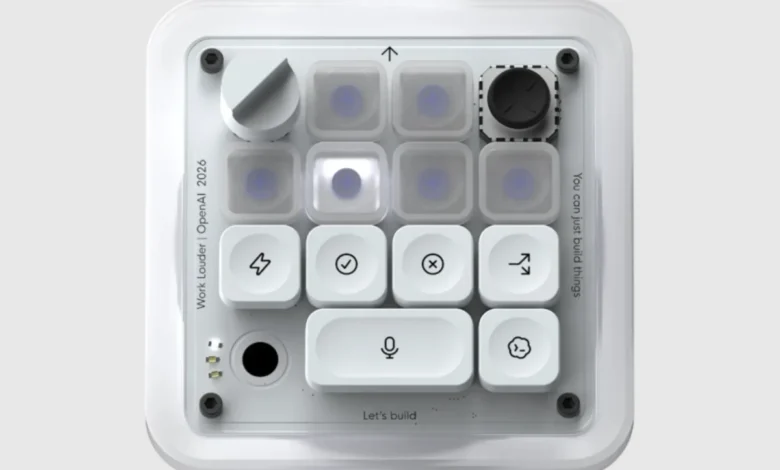
OpenAI, the prominent artificial intelligence research laboratory, has ventured into the hardware market with the recent unveiling of its inaugural physical product: Micro. This compact keypad, developed in collaboration with specialty keyboard designer Work Louder, is positioned as a sophisticated accessory designed to enhance user interaction with ChatGPT. However, its debut is shadowed by ongoing legal battles and questions surrounding OpenAI’s broader hardware aspirations.
A Controversial Entry into Hardware
OpenAI’s foray into hardware has not been without significant controversy. Just weeks prior to the Micro’s launch, Apple initiated legal proceedings against the AI firm, levying accusations of trade secret theft. This lawsuit is anticipated to ignite a protracted legal dispute, the ramifications of which are yet to fully unfold. Adding to the intrigue, reports have surfaced regarding another smart home device under development at OpenAI. This purported device, also intended to integrate with ChatGPT, is reportedly being engineered by a team comprising former Apple engineers, further fueling speculation and scrutiny.
These developments suggest a strategic, albeit contentious, expansion by OpenAI beyond its core software offerings. The company’s trajectory indicates a clear intent to establish a more tangible presence in the consumer technology landscape, potentially challenging established players and redefining user engagement with AI.
The Micro Keypad: Design and Functionality
The Micro keypad itself is a sturdy, artisanal device. Its design emphasizes a sleek aesthetic, reminiscent of high-end tech accessories. The packaging, a minimalist white box, further evokes a premium feel, drawing comparisons to Apple’s signature product presentation. This deliberate design choice, whether intentional or coincidental, has not gone unnoticed by industry observers.
The keypad features a dual-tier layout. The upper section is equipped with six "agent" keys, which are customizable to execute specific functions within ChatGPT or OpenAI’s coding tool, Codex. Beneath these, six "command" keys are provided to facilitate direct control over these AI programs. Connectivity options include both Bluetooth and USB, offering users flexibility in how they integrate the Micro with their computing devices.
One of the most touted features of Micro is its voice dictation capability. Users can activate a dedicated button to speak their commands or queries, which are then transcribed and submitted to ChatGPT. This hands-free interaction aims to streamline workflows, particularly for tasks involving extensive text input or complex prompts. The integration with ChatGPT allows for granular customization. A dedicated "Micro" tab within the ChatGPT interface enables users to adjust key brightness, assign specific commands, and link keys to particular projects or AI agents.
User Reception and Market Positioning
Despite its innovative features and premium build, the Micro keypad has encountered a mixed reception, particularly within its purported target audience of dedicated coders and AI enthusiasts. Reviews on platforms like Reddit have largely been critical, with some users dismissing the product as a "prank" or not a "real product." Concerns have been raised about the device’s necessity and its value proposition compared to existing solutions.
Independent reviews have been even more pointed. One review from Aftermath, for instance, heavily criticized the $230 price tag, deeming it difficult to justify when compared to more affordable DIY macro pads or off-the-shelf alternatives. The review’s title, "OpenAI’s expensive macropad feels engineered to piss me off specifically," encapsulates the sentiment of dissatisfaction regarding the cost-benefit analysis of the Micro.

The learning curve associated with programming and operating the Micro also presents a potential barrier to adoption. The keypad utilizes a color-coded system to indicate the status of AI agents: white for idle, blue for thinking, green for task completion, and red for errors. Users are expected to memorize these cues, alongside the specific assignments for each key, which adds a layer of complexity to the user experience.
The fundamental question remains whether the Micro offers a demonstrably superior user experience compared to conventional input methods. For many, the time and effort required to master the Micro’s programming and operation might outweigh the perceived benefits, especially for individuals already proficient with their existing keyboard and mouse setups.
The ChatGPT Dependency
The ultimate utility of the Micro keypad is intrinsically linked to an individual’s engagement with ChatGPT. For users who do not frequently utilize AI tools in their daily workflows, the Micro may indeed represent an extraneous purchase. However, for dedicated ChatGPT power users, the scenario shifts.
For those who invest significant time in leveraging ChatGPT for various tasks, the Micro could potentially offer a tangible increase in efficiency and enjoyment. The ability to assign and rapidly switch between different ChatGPT sessions and projects, coupled with the convenience of voice dictation, could transform the user experience. The tactile feedback of the clicky buttons, combined with a vintage-inspired aesthetic, might appeal to a niche market of users who appreciate both functionality and form.
Broader Implications and Future Outlook
OpenAI’s entry into the hardware arena, even with a niche product like Micro, signals a broader strategic vision. The company appears intent on creating a more integrated ecosystem around its AI technologies, extending beyond software interfaces to encompass physical interaction points. This move could be seen as an effort to capture more of the value chain and to foster deeper user loyalty by providing proprietary hardware solutions.
The legal challenges posed by Apple, however, cast a shadow over these ambitions. If OpenAI is found to have infringed on intellectual property rights, it could significantly impede its hardware development and expansion plans. The successful integration of former Apple engineers into OpenAI’s hardware division, as reported, further underscores the potential for friction and legal scrutiny in this domain.
The development of the screenless smart home speaker, also reportedly in the works, suggests that OpenAI is not solely focused on productivity-oriented peripherals. This indicates a potential play for the broader smart home market, where competition is already fierce. The success of these ventures will likely depend on OpenAI’s ability to differentiate its offerings and provide compelling value propositions that justify the investment for consumers.
In conclusion, OpenAI’s Micro keypad represents a bold, albeit controversial, step into the hardware domain. While it offers innovative features for dedicated ChatGPT users, its high price point, steep learning curve, and dependence on consistent AI usage present significant hurdles to widespread adoption. The ongoing legal battles and the company’s ambitious hardware roadmap suggest a period of significant transition and potential disruption for OpenAI as it navigates the complex landscape of consumer technology. The ultimate success of Micro, and OpenAI’s broader hardware aspirations, will hinge on its ability to overcome these challenges and deliver tangible, compelling value to consumers.